Showing posts with label new. Show all posts

10.6.15

(New) The Basics' Peanut Butter

Obviously, merienda.
Hello internet world! We interrupt this silence to talk about peanut butter.

If you are like me, you often choose not to peanut butter at all versus compromising by eating hotel breakfast peanut butter of the choke-hazard variety (insert memories of Jif). In fact, I prefer the goopy Lily's variety (complete with libreng baso) to those thick, tasteless conglomerate ones. I wish hotels and restaurants serve Lily's, at least.

But anyway, we are now stocking The Basics' Original Muscovado Peanut Butter. We've gotten samples of nut butters over the years, but most of them use palm oil and white sugar, or are made of imported nuts. This jar is pretty much how we would make peanut butter, if we were to make it ourselves (thankfully someone else is concentrating on that, it's not easy).

It's so yummy that around 3/4 of the jar was eaten off the spoon, and not on bread or anything.

11.7.14

(New) A Ritual Special Project, Mainly Involving Butter

After more than a year of silence on here, we would like to use this blog to introduce the first of our special projects. We have decided to use some of our resources to "incubate" (though we do shudder to use the word for non-egg-related contexts) the development of artisanal, high-quality products suitable for our shelves, and for all shelves clamoring for such things.

We wish to do this by supporting a team of farmers, small producers, and chefs who are happy to develop things from very basic beginnings.We've been around and seen the potential of our land and its produce, but it's gonna take more than our collective efforts as a company.

Our first such project is loosely called "The Butter Project", which we are doing together with chef Jordy Navarra of Black Sheep. The goal is to produce a local butter from pastured (grass-fed) bovines, without artificial colorants and preservatives, beyond food-processor-DIY standards, and something to replace the margarine plaguing our fair islands. Eventually, we hope.

Jordy at a farm together with an actual, partially-black sheep.


Jordy is a talented young man who has put massive effort into bringing Filipino produce into a contemporary dining setting. Black Sheep's signature dish, the Bahay Kubo, actually showcases all the vegetables from the song "Bahay Kubo", which actually gives a rollcall of humble, diversified Filipino garden-farm species. He also bravely serves things that are quite risky because of local diner perception. We applaud him for that, and for many things.

Two prototype butters, for tasting.
Furthermore, his restaurant uses massive amounts of butter (he was one of  those who was really interested during our first butter production runs), so he knows what a good butter tastes like, acts like, behaves like. Last month, we embarked on our first trip with Jordy to Negros Oriental to see the milking process, pasturing process, separation process, and all other processes necessary to get butter.

And the results with one visit were astounding (wait til the coming weeks for even more progress!). After a few days, there was already a secret trick or two developed by Jordy, who donned lab equipment and went where no ordinary person could go (into the dairy lab). His getup and the off-limits nature of the operation left us no choice but to dub the operation "Breaking Butter". Obviously, no meth synthesis was involved. The experience and education was very encouraging for the people running the dairy as well, who were stuck on the confounding question of "Why does ritual want us to make weird-tasting butter?".

A butter tasting at the dairy processing plant. Everyone's first taste of cultured butter.
Tomorrow, we are unveiling the raw cow's milk butter, aged butter (which tastes of a blue-veined cheese), and raw carabao milk butter at Yummy Eats 2014. Come by for a free sample. Remember, these are works in progress. But we feel the quality is getting closer to some of the nicest European butters. Your support will help push us further along to creating the most perfect butter a tropical island can produce.

8.11.12

(New) In the Chiller: Beer and Cheese!

Good morning everyone. I know you all are getting pretty antsy about Christmas and we are working triple time to get goods out as early as possible. Some patience as we are experiencing high volumes of pre-orders already!


Meantime, pop in for some Katipunan Craft's (unpasteurized) Indio Pale Ale, something that we are really happy about lately. It's a very "easy" beer to like and integrate into your life (I had not a few within an hour yesterday while working). The young Turks behind it have tweaked the pale ale to suit Pinoy tastes, so if you're used to San Miguel (aren't we all), a sip of this will easily lure you into the dark, bubbly side of the emerging beercraft movement that is thankfully giving males a creative outlet in the metropolis. We have special interest in this growth and will keep you posted on workshops, events that are beer-related.

We are also now stocking Blackbird Farms' cheese! Blackbird Farms is a family-run estate in Bulacan that raises goats and makes fresh feta cheese and spreads. Feta is a great lazy-and-independent person food. It livens up any salad, or a procrastinator's cracker late at night. So are the spreads, which chunky and savory.


26.6.12

(New) Pinkerton & Ritual's Oregano and Arabica Ice Creams!

Pinkerton uses our ingredients to churn out yummy flavors: oregano and arabica ice creams, both with water buffalo milk, organic honey, and coconut sugar. They taste heavenly.

Stop by for some pints, or scarf down a scoop topped with roasted cacao nibs or native chocolate sauce (made with water buffalo cream!).


2.5.12

(New) Beyond Wheat Flour and Corn Starch: How to Cook Sago Flour

Wheat doesn't really grow in the Philippines. We've heard about it growing in very small quantities, but we've never actually seen it. It's just one of those things that you find in every part of the world, in the standard form of "all-purpose flour".

The standard flour is usually bleached with benzoyl peroxide, chlorine gas, or other bleaching agents. The latter makes flour white and shortcuts the aging process. There is a lot of debate about the safety involving byproducts of bleaching (alloxan, in particular, which has been linked to diabetes). This technology has allowed the massive scaling up of the flour milling industry, allowing for millions of tons to be processed each day. Which is quite an abnormal thing, in the greater scheme of the earth, I suppose.

More people have been requesting for gluten-free flours and starches, too. So, though a bit difficult to come across, we've started to search for alternative flours. All the folks that have been asking, these are for you!


Sago starch (sometimes called a flour) is used in Southeast Asia and South Asia. In the Philippines, it used as a staple food predominantly by lumads (indigenous people), but historically was widespread in some parts of Mindanao-- we were even importing them from Makassar. Today, Butuan is a place that is particularly notable in its continuing use of sago. The non-kakanin kakanin palagsing inspires spontaneous emotional poetry among locals. Tumpi and inisab do the same.

Forest starches are growing increasingly uncommon in the Philippines. In our observation, the Visayas region uses its buri starch in the same way as sago starch is used in Mindanao. The starch is extracted from the wild sago palm (Metroxylon sagu) in a very labor-intensive process (which the fantastic EatingAsia has documented so well here). 

Our partner producers here are the indigenous Manobo of Agusan del Sur (where the starch is called natek), who are making the starch as a sustainable forest product exploration. It is grown without pesticides or fertilizers. We use it as sauce thickeners (in place of the horrifyingly ubiquitous corn starch) and to make our version of puto seko with coconut sugar. It is very easily digestible and can be used in porridge for convalescents or babies. It may also be substituted for the starch component of gluten-free flour mixes. Some use it to make ice cream cones. We would love to hear how you guys can find uses for it.

Here are some other recipes we've compiled and will try out through the weeks. We'll also be posting our kitchen experiments in the coming days.

South Indian Sago Papadoms
Indonesian Es Cendol, a super yummy shaved ice snack
Indonesian Pempek Palembang, sort of like fish balls
Indonesian Sagu Keju (Cheese Biscuits), just substitute butter for the margarine
Indonesian Steamed Kue Pepe (Layer Sago Cake)
Malaysian Fried Sago Pancakes
Papuan Saksak (Sweet Sago-Banana Dumplings)
Singaporean Sago Cookies, like uraro or puto seko

We'll be bringing some this weekend to the Legazpi Market, so bring your containers!

24.10.11

(New) Pure Beeswax Travel Candles


Pure, unscented, hand-poured beeswax travel candles. The wild beeswax is sourced from several areas of the Philippines, and is perfectly safe to burn (unlike paraffin) and sustainably produced (unlike most soy wax). Take it with you camping, or to the inevitably stuffy weekend home.

Candlelight and moonlight are some of our favorite sources of illumination, and this travel jar takes its cue from the underdog moon-- which, when full, "rivals the sun".

6.10.11

(New) Flavored Salts


More flavored salts for your popping corn and eggs (as in this awesome blog post on 80 Breakfasts). Alagaw salts coming up this weekend too. Yes, it's our "thing" right now. We eat it a lot.

21.9.11

(New) Raw Cashews, New Coconut Sugar, Coffee Concentrate, and Theo + Philo Toffee Flavor!

New stuff at the shop! Raw cashew nuts from Bataan, a new coconut sugar from a new community in Cagayan de Oro (great sugar-- minimal moisture), cold-brewed arabica coffee concentrate, and a new flavor from Theo + Philo-- milk chocolate and toffee! The new bar chow-- so good with shots.


22.8.11

(New) Non-Sweet Pan De Sal Testing Mode


We've been testing non-sweet pan de sal, after harboring cravings that haven't been satisfied in decades. People seem to love it, giving us faith in the world again. We thought it had been overrun by the dogma of sweet, sticky pan de sal. Turns out many are yearning for the crusty, salty bread of the past. Coming soon...

6.8.11

(New) Macho Mustard and Homemade Miso


We have new stuff in the chiller!

Our "macho" mustard is coarse, pungent, sour, and very textured, made from scratch with two types of whole grain mustard. It also has some wine and dagwey preserves in it to balance out the spiciness. Definitely a "grown-up" mustard, it goes on easy with salmon or soft cheeses. It's also perfect for a quick marinating of meats. One of our customers said it reminds him of Bengali cuisine. Definitely more popular among horseradish fans.

Our homemade miso is made by a lovely Japanese lady from scratch, from ground rice and soybeans, as well as a koji starter from Japan. It is worlds apart from the miso you buy in groceries, which has a lot of wheat flour and coloring. This one doesn't spoil, only evolves into different tastes (all good) in different stages of its maturity. Fermented foods usually give that savory taste that are important for quick but nutritious food-- use it in dressings, mixed with spreads, and as a soup base instead of those crazy cubes. Make any of these recipes with grocery-bought miso and with our high-quality homemade miso-- you will definitely notice the difference!

30.7.11

(New) Fancy Baon


Our new enamel tiffins from Indonesia are a fancy, slightly kitschy plastic-free way to bring your baon. Enamel is porcelain hugging aluminum or stainless steel. Bring your potluck toka around in this Asian beauty and bring some Dengue Fever to play.

29.7.11

(New) Excellent New Tablea


We are pleased to have some of the best tablea we have ever tasted, grown, fermented, roasted, and ground in Calinan, Davao. The beans are a far cry from the commercial varieties preferred for their size in mainstream international trade-- they are from old-tree pods, smaller, green and white in coloration, and with a lot of flavor. Smooth, fruity. One of our favorites so far! They are grown and processed by a cooperative, who are doing marvellous in organizing themselves for fair, high-quality beans. We look forward to increasing their revenue by developing more products from their excellent beans.

19.6.11

(New) Craft Beer From Bacolod

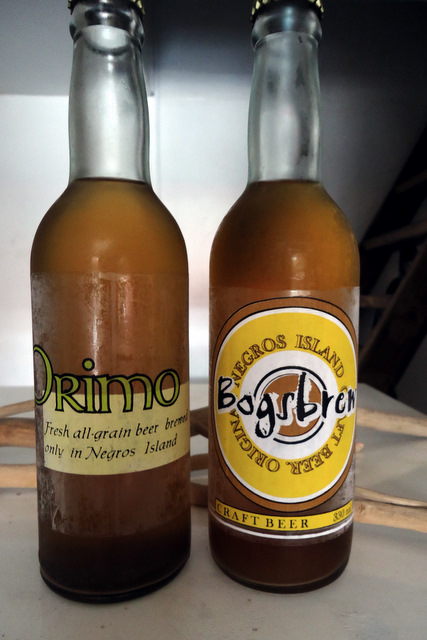
Some of you may know this as "the beer from Bacolod". It's BogsBrew, the country's first craft beer. It is not pastuerized and then carbonated, like commercial beers. The fizz comes from the fermentation process-- it is less aggressively bubbly than San Miguel, of course.

But the flavor is worth a visit! Bogsbrew uses the usual barley, local mascobado sugar and Negros spring water, and has a pleasant sweetness and smoothness. The same brewers also make Primo, an all-grain variety containing local corn and rice, and wild honey. Both are great. And to answer a few preliminary questions, it is "real" beer and doesn't taste like carbonated fruit drink.

There is a lot of buzz in the food world now about unpasteurized wines and beers, because people have begun to realize that commercializing them has made potentially healthful and funful products into things that are "bad for you". Drinking Bogsbrew gives you a nice little buzz and doesn't create that acidic taste in your mouth. The fizz is emitted by microorganisms that release CO2 as part of their "eating" the sugars-- essentially the fermentation process-- which you can get from making ginger "beer" at home. It replenishes your digestive enzymes, leaving you ready for a Sunday rebound brunch. There is a natural sediment in the beer from the fermentation process that contains vitamin B complex, which vegans could use.

Now, to track down some unpasteurized wine. And more brewers, please.

3.6.11

(New) Absentee Gardener Mushroom Waterers


Do you like plants and travel? Sometimes that can be a problem. Coming home to dead plants is tragic. These mushroom plant waterers may help. They are filled with water. The bottom, porous part must be buried under soil beside your plant roots (or you can plant in a circle around the mushroom). Water will seep out gradually into the roots. The rate of weeping is determined by heat, soil consistency, and other factors.


The same concept is used on a larger scale in traditional American ollas or terra cotta jars. Click on the link to see an article on ollas from the homestead Path to Freedom.

There are vintage waterers for sale in other parts of the world. The above was our favorite variation that we found on eBay.

1.6.11

(New) Nipa Moonshine ver. Wild Civet Cats

It is an understatement to say that our "moonshine"-- nipa vodka, distilled from the nectar of the brackish palm Nypa fruticans-- has a rabid following. We have been asked "Aren't you the ones who have that moonshine?" in the strangest places indeed.

Over the months, we've made various incarnations: plain, infused with various plants (pepper, star anise leaves, local oranges), mixed with mascobado sugar and honey. The latest, very limited variation is an excellent infusion of wild civet coffee beans (from a sprawling mountain estate in Batangas) together with pure vanilla bean.

Not that we are alcoholics, but when a night of free-flowing conversation and libations is in order, we prefer this local spirit: sustainably grown, harvested (by cutting off the fruit, pictured above, and installing a bamboo collector, below), and wood-fired distillation (allowing for a carbon emission equal to only the amount captured by the fuelwood). It is an open base, with slight sweetness, and a poweful punch (80 proof). Not jarring like coconut lambanog, it has received raves from our friends all over the world (yes, we do pack our own alcohol).

Our expriences around the moonshine have been some of our best. Riding small boats down several marshes, past wild crab hunters and those collecting nipa leaves for thatched roofing, drinking our booty in a log cabin at night, preparing our mix for the ride back home (coconut milk and pineapple). It is an honor to throw our own little wrench into the huge machinery of global alcohol production. We are perfectly happy to sip our local organic spirit, with excellent quality, sans preservatives, not from concentrate, not shipped from halfway around the globe.

Locals, get brewing, get distilling. Small-batch alcohol production, thine time has come.




30.5.11

(New) More Theo & Philo Chocolate Flavors!


We are happy to introduce the new Theo & Philo flavors in our shop: ginger and calamansi! The pan de sal flavor is gone, but sink your teeth into these two tropical lovelies.

28.5.11

(New) Sewing Tools


Mending things reminds us that we have the ability to make things right again. It soothes our subconscious and acquaints us with problem solving at a small, manageable level. I cannot begin to expound on the therapeutic value of taking a needle to a hem that was undone, and holding your finished creation up for inpsection.

Sewing in itself has always been an important domestic avenue of creativity and invention. My grandmother would innovate on the toaster cover by including a pocket for small tongs (to handle hot bread with).

Unfortunately, in an age when shortening an ordinary pair of pants in Makati will set you back about 100 pesos, the tools (and skills) of sewing are obviously no longer ubiquitous.


Thimbles (above, on middle finger) were originally essential in every household, but are now met with puzzled looks. I still remember getting a fancy painted porcelain one as a childhood present! They are used protect the finger from needle pokes, or to help push needles into thick fabric like denim. They have small indentations that allow for slip-free forcing of the needle through.


We have a bunch of stainless steel ones at the shop.


Tailoring scissors or shears are used to cut through heavier fabric, where "normal" smaller pairs of scissors would prove challenging to use. Traditionally, they are made with cast iron and steel, with a brass bolt holding the blades together. It provides the weight for a steadier hand.


Our tailoring scissors are vintage pairs made from traditional materials, and come in these awesome boxes. They have a well-sized cutting edge (the "bottom" blade), allowing for good slicing through your pet fabrics.

23.5.11

(New) Cotton Tablecloth


It seems a bit hardcore to call tablecloths "biodegradable", but it's worth a mention that today's standard vinyl, nylon, and poly tablecloths have the ecological effects of giant plastic bags. We've tried composting them, and they don't. They end up in landfills.


Hence, we have a few of these rough cotton tablecloths available. They look better anyway.

5.5.11

(New) Local Cheese, Forest "Prunes", Dried Squid and Kamias


We now stock one variety of Malagos Farmhouse cheese. There is only one that is not sold in plastic-- Blush, a semi-soft, cow's milk cheese that is mild and succulent. It was marinated in bignay (Antidesma bunius) wine, and has mild hints of fruit and blue. The flavor is actually more complex than the first impression-- for us, it would resemble Camembert, then segue into a non-smoky Idiazabal. They are beautiful wheels. Olive Puentespina of Malagos, Davao, really puts her heart into her cheeses, and she makes them a cut above all the hobby-level stuff in the metro.


Those that trawl organic supermarket sections have seen these dagwey (Saurauia subglabra) preserves before. They are from a forest tree from Nueva Vizcaya, and are sweetened with some sugar and dried. They taste like prunes, and are an addictive snack. They can also be used to bake prune cakes, and do call us for a tasting when you do. They do well with yogurt and granola. I imagine a Moroccan tagine or some pate with it. Yes? Now you can get them in small or large quantities, without packaging.


And dried squid for breakfast! The thin, "ballpen" type, scientifically called Uroteuthis bartschi. This species swims inshore in the shallow waters of the Calamianes Islands, and contains light-producing organs. They are processed naturally, sundried with no preservatives. Fry them and eat (dipped or not in vinegar) with garlic rice. They can also be used to add a bit of mysterious complexity to your broths and sauces. For Korean and Japanese style preparations, soak for a bit before slicing and cooking.


And ah, kamias. We used to pluck the fresh ones off the tree and eat with rock salt, testing the limits of our taste buds. Some would candy them. But the season does not last all year. Luckily, Batanguenos dry them religiously, and use throughout the months to make sinaing na tulingan, or guinataang tambakol. You can also boil them to make a sour summer punch! We've been so happy that people are trying this out at the shop. We love to see you experiment.

(New) Refill Your Jam Jar

... Or any jar, for that matter. We are now allowing you to bring your jars in for our "Jam of the Moment", Pineapple Coconut Rhum. It is positively one of the most fun sweet preserves there is.

The Fruit Garden makes local jams using traditional French methods and that famous copper pot. Pierre is quite ecologically minded as well and has allowed us to take the whole jam refilling concept for a spin. The drill is: You bring a clean jar. And we will spoon jam into your clean jar. How do you like that? Jam without the unecessary jars, since you've probably got a lot lying around your house anyway. You will then refrigerate the jam immediately, in between consuming it liberally, because life is for living and jam is for eating.